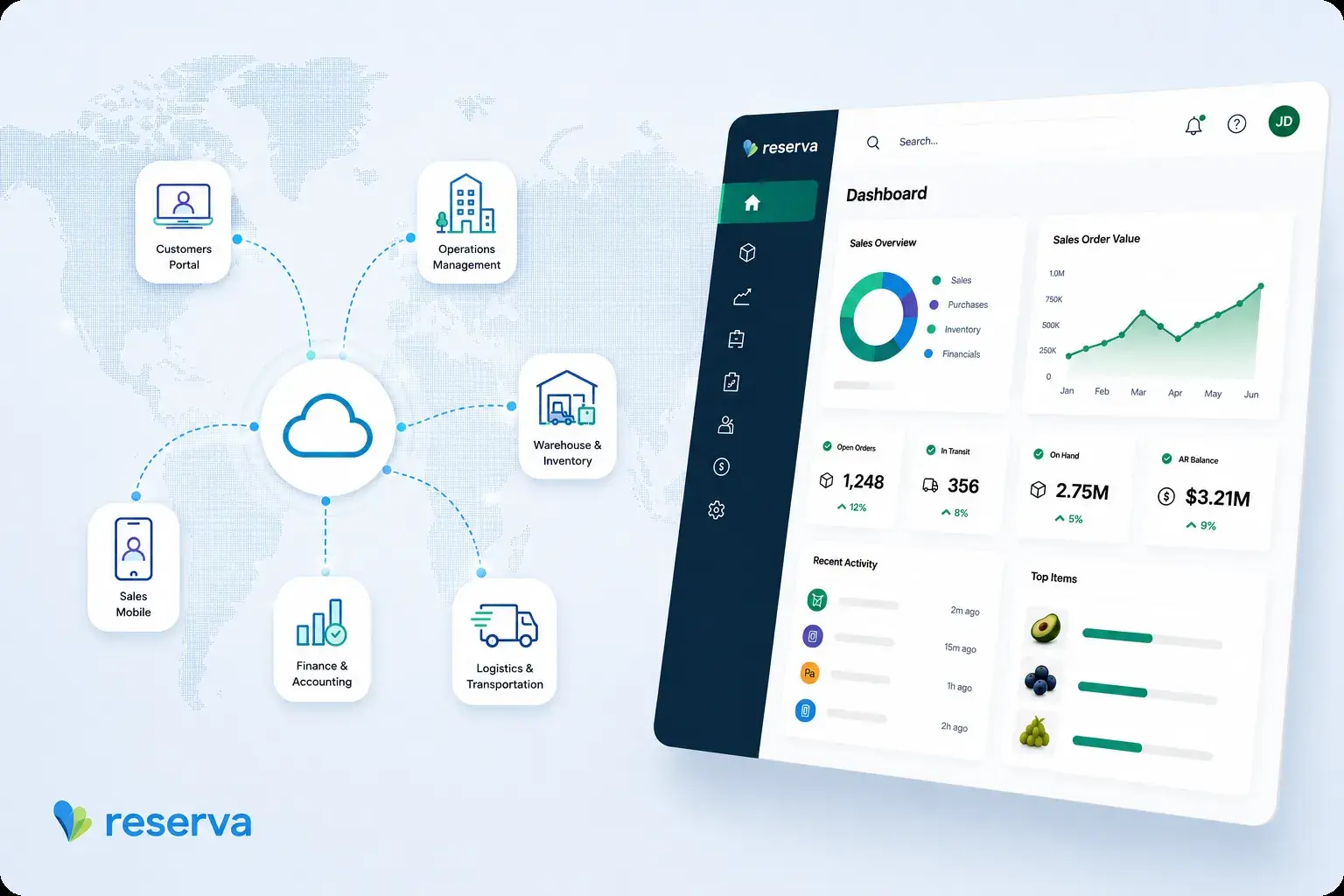
| Core Technology | Mature Windows client/server ERP built on Oracle; deployable locally or hosted. | Cloud-native SaaS core designed for browser access from the beginning. | The architecture influences deployment, accessibility, infrastructure requirements and how easily the platform can evolve with distributed operations. |
| Remote and Distributed Access | The core client is LAN-oriented; Famous recommends RDS or Citrix for remote users and locations. | Browser-first core ERP access without remote desktop as the normal user experience. | Direct browser access connects employees across offices, warehouses and countries without placing remote-desktop infrastructure between users and the ERP. |
| IT Footprint | Servers, databases, Windows/Active Directory, networking and remote-access architecture remain deployment considerations. | Core ERP infrastructure is provider-managed under the SaaS model. | A provider-managed core can reduce the infrastructure, maintenance and technical coordination the customer must own around the ERP. |
| Core User Experience | Traditional Windows desktop client supplemented by modern mobile applications and BI. | Web-based experience across the core ERP, not only selected mobile extensions. | A consistent web experience can simplify access and adoption across roles. |
| Mobility and Scanning | Strong applications for sales, QA, receiving and tagging; its WMS supports specific industrial handheld hardware. | Mobile and tablet workflows with barcode scanning from common phones and tablets for many use cases. | Commonly available devices can reduce specialized hardware dependency and make selected warehouse and field workflows easier to deploy. |
| Customer-facing Ordering | The public portfolio highlights an internal Sales App and EDI/FIS; no native buyer-facing eShop product is publicly presented. | Reserva eShop gives customers a direct digital ordering channel connected to ERP inventory, pricing and order workflows. | Buyers can submit structured orders directly, reducing manual entry while keeping pricing and availability connected to the ERP. |
| Customization Economics | Custom development is available through Famous professional services. | Enterprise includes unlimited custom development at no additional charge, backed by Reserva’s lifetime customization commitment. | Both platforms can adapt, but Reserva’s commercial model makes ongoing changes more predictable. |
| Software Upgrades | Famous now publishes quarterly releases; its broader commercial terms are quote-based. | Software upgrades are not charged separately. | Included upgrades give customers greater clarity around the ongoing cost of keeping the platform current. |
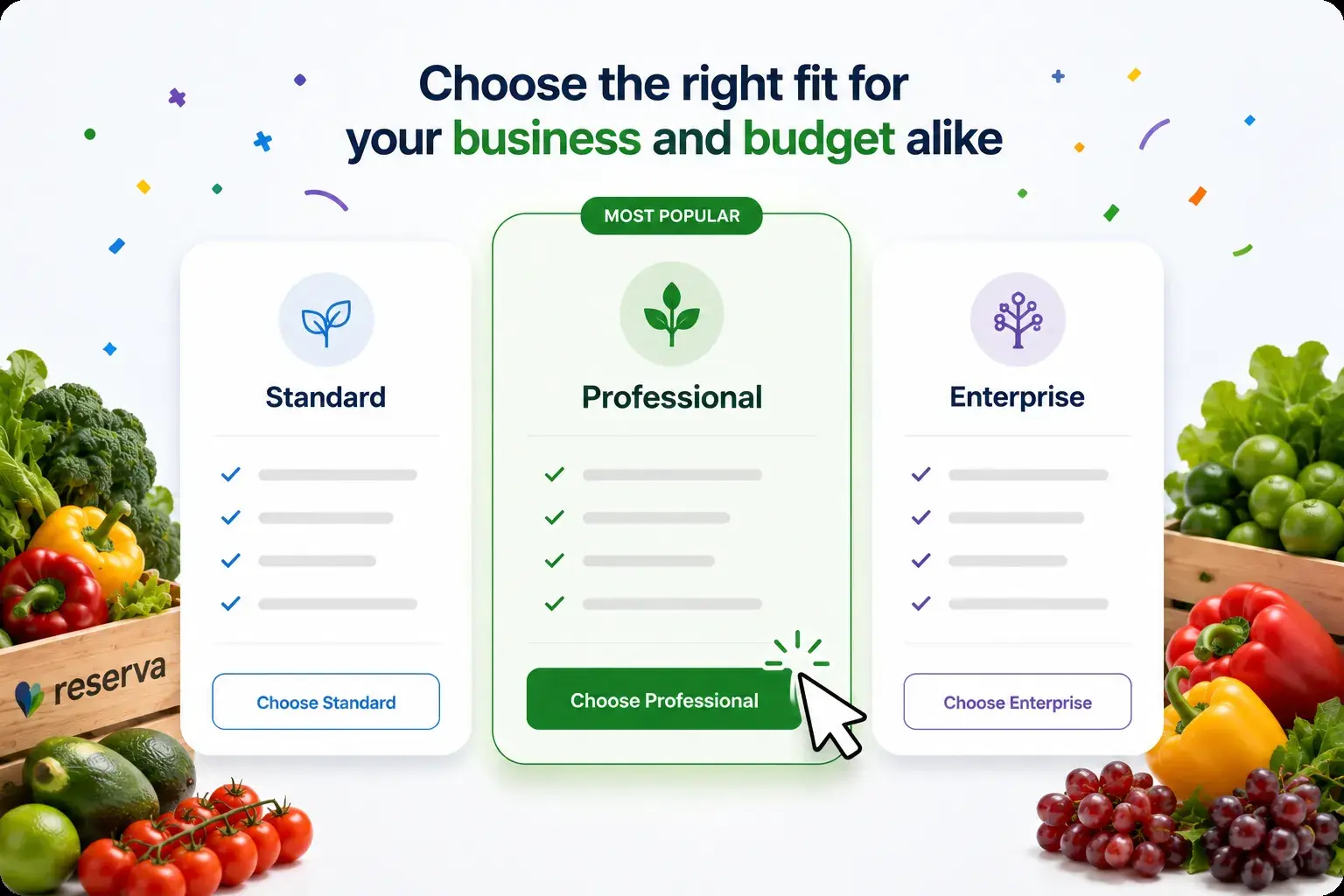
| Pricing Visibility | Public pricing is quote-based. | Reserva publishes packaged subscription plans, giving buyers a clearer starting point for budget comparison. | Upfront pricing transparency helps buyers estimate budgets, compare options and plan for ERP costs earlier in the evaluation. |
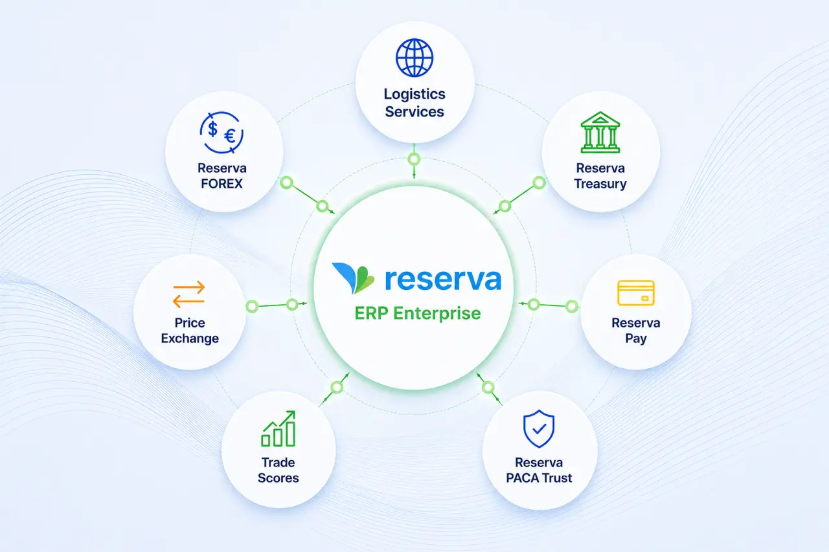
| Treasury and Liquidity | Strong ERP accounting and financial management. | Extends ERP into Treasury, liquidity planning, AR/AP automation and cash-management workflows. | Connecting operational records with cash planning gives finance teams a more direct view of how purchasing, receivables and payments affect liquidity. |
| Payments, FX and Financing | Not publicly positioned as core Famous ERP products. | Offers domestic and international payments, foreign exchange and financing capabilities around the ERP relationship. | Cross-border companies can connect more payment and currency activity to the same platform relationship. |
| External Market intelligence | Strong BI, forecasting and internal operational analytics. | Adds external produce-market pricing and market intelligence alongside internal ERP data. | Combining internal performance with external market signals gives purchasing and sales teams more context for pricing, sourcing and margin decisions. |
| North American Localization | Broader worldwide footprint. | Primarily localized and deployed in the U.S., Mexico and Canada, with cross-border payment and FX capabilities. | Companies operating across North America gain a platform focused on the regional entities, currencies and cross-border workflows most relevant to them. |